Categories
Reasons for Passivation and Failure of Ruthenium Iridium Titanium Anode
Mar 24th,2025
616 Views
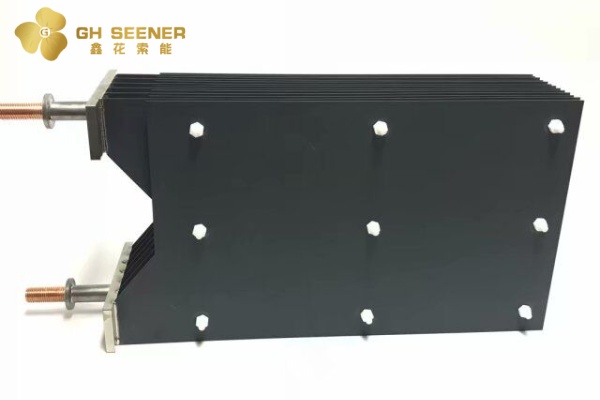
The working life of ruthenium iridium titanium anode during electrolysis operation has a certain limit. When the voltage rises very high and there is actually no current passing through, the ruthenium iridium titanium anode loses its function, and this phenomenon is called anode passivation.
There are several reasons for ruthenium iridium titanium anode passivation. Please see as follows:
1)Coating Fall Off
The ruthenium iridium titanium anode is composed of a titanium substrate and a ruthenium iridium titanium active coating. The ruthenium iridium titanium active coating only plays an electrochemical reaction role. If the coating is not firmly bonded to the substrate and falls off from the titanium substrate to a certain extent, the ruthenium iridium titanium anode will lose its function. Coating peeling can be divided into three types: crushing peeling, convex layer peeling, and cracking peeling.
2)Cracks in Coating
During electrolysis, new ecological oxygen is generated on the ruthenium iridium titanium anode, with a portion of it discharging at the interface between the active coating and the electrolyte, and then leaving the anode surface to generate oxygen that enters the solution; Due to the presence of cracks in the active coating, another portion of oxygen is adsorbed on the anode surface and diffuses or migrates through the active coating to reach the interface between the coating and the titanium substrate. Then, oxygen is chemically adsorbed on the surface of the titanium substrate, forming a non-conductive oxide film (TiO2) with titanium and generating reverse resistance; Alternatively, the electrolyte may penetrate through cracks in the coating, causing the titanium substrate to slowly oxidize and corrode the interface with the ruthenium iridium titanium active coating, resulting in the detachment of the ruthenium iridium titanium active coating and an increase in the anode potential of the ruthenium iridium titanium. This further promotes the dissolution of the coating and oxidation of the titanium substrate.
3)RuO2 dissolved
The occurrence of low oxygen can slow down the formation of oxide film. When the total current density of electrolysis increases, the rate of chlorine generation increases much faster than the rate of oxygen generation, so an increase in current density is beneficial for reducing the oxygen content in chlorine. Pre oxidation treatment is carried out on the titanium substrate to form a layer of oxide film, which can increase the bonding strength between the ruthenium iridium titanium active coating and the titanium substrate, making the coating firm and preventing the detachment and dissolution of ruthenium. However, it can also cause an increase in the ohmic drop(The potential difference caused by the current flowing through the electrolyte)of the ruthenium iridium titanium anode.
4)Oxide Saturation
The active coating is composed of non stoichiometric ruthenium dioxide and titanium dioxide, which belong to oxygen deficient oxides. The truly active centers for chlorine discharge are non stoichiometric oxides. The more such oxides there are, the more active centers there are, and the better the activity of the ruthenium iridium titanium anode. The conductivity of ruthenium iridium titanium coated anodes is the performance exhibited by distorted n-type mixed crystals generated by heat treatment of the same crystal form of ruthenium dioxide and titanium dioxide. There are some oxygen vacancies present, and when these oxygen vacancies are filled with oxygen, the overpotential rapidly rises, leading to passivation.

